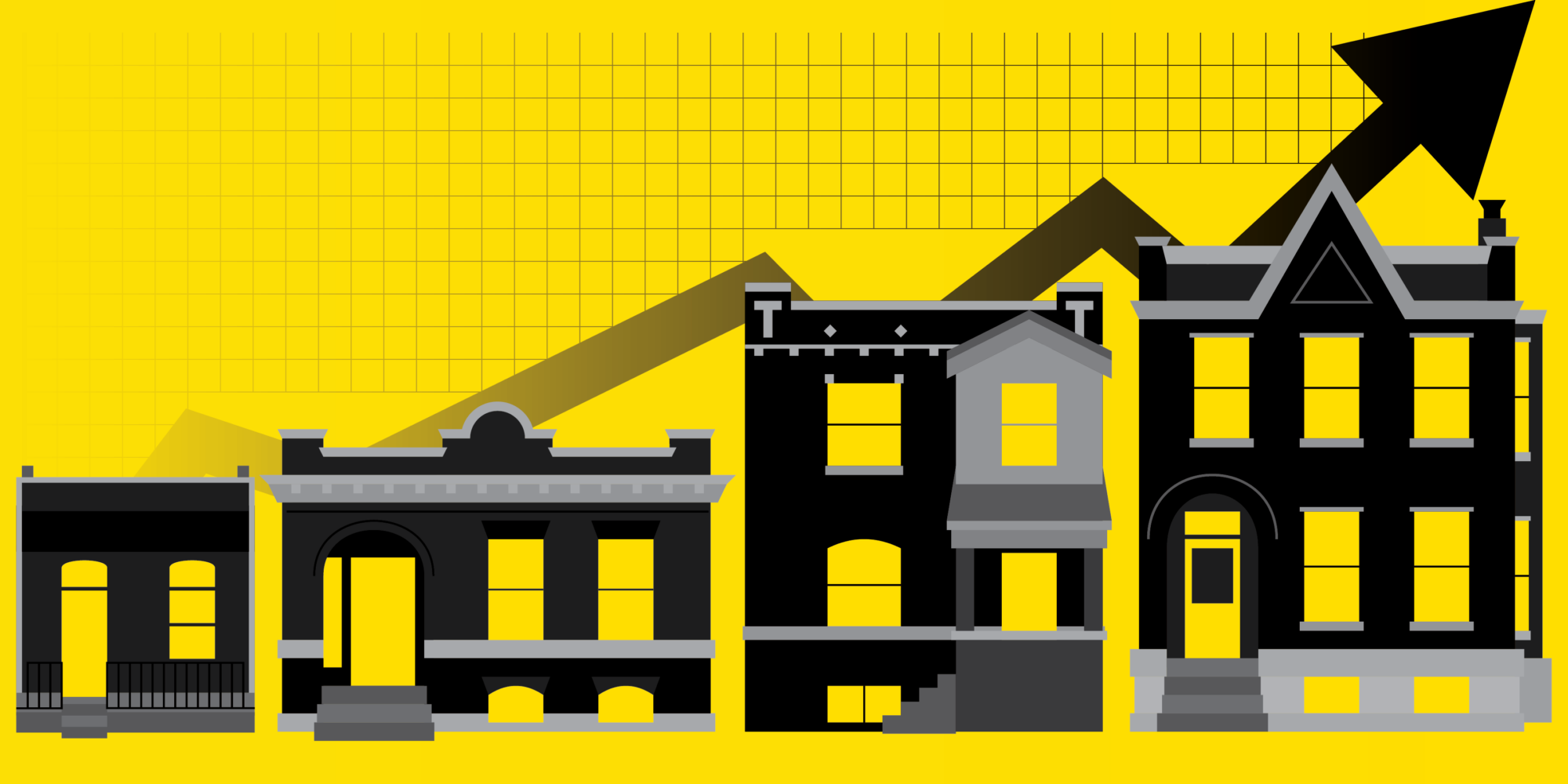
While traditional mortgage data reveals the lingering legacy of redlining in real estate practices, home-buying trends in Dutchtown illustrate a phenomenon that is not replicated anywhere else across the St. Louis region.
It is no secret that the ongoing legacy of discriminatory practices in the mortgage industry has unfortunately left many Black buyers unable to secure the financing needed to access high-opportunity areas. Nationally, Black applicants were denied home purchase mortgages at a rate of 19% in 2024, roughly 1.7 times the 11.27% rate for all applicants.
The disparity is not merely a function of household income, credit scores, and other financial factors. Even after controlling for the lender and for borrower financials, a 2026 Federal Reserve Bank of St. Louis analysis of more than 30 million applications found Black applicants were still 7.8% more likely to be denied than White applicants.
Across Greater St. Louis, mortgage data reveals that White borrowers are approved for substantially larger home purchases than Black borrowers. On average, White buyers are approved for roughly $203,000, compared to $157,000 for Black buyers—and White borrowers are approved for many times more purchases than Black buyers. Nationally, Black and Latino borrowers have received mortgage originations at roughly half the rate of White borrowers since 2015.
Real Estate and Wealth Generation for Black Families
When viewing real estate as a wealth-generating engine, this $46,000 gap per loan exacerbates the racial wealth gap, one transaction at a time. And real estate is the predominant source of wealth generation available to Black households. Home equity now represents the largest share of Black wealth since the start of the twentieth century. However, the typical Black family holds roughly 15% of the wealth of the typical White family.
How Is Dutchtown Different?
In Dutchtown, the financing gap between Black and White buyers does not just shrink. It flips.
The average Black borrower in Dutchtown finances a larger loan than the average White borrower: about $147,000 for Black buyers versus $139,000 for White buyers. While the regional pattern indicates that Black buyers get less, Dutchtown says the opposite.
Critically, Dutchtown is not a neighborhood of identical houses. Our housing stock is genuinely diverse in size, from modest homes well-suited for singles or couples to bigger homes for growing families, to a variety of multi-family housing—far more variety than seen in neighborhoods built out in a single uniform wave. There’s something for everyone in Dutchtown.
In markets with diverse housing stock, like Dutchtown, a larger loan likely indicates a buyer has chosen a larger or more substantially renovated property. So, when Black borrowers here finance more than their White neighbors, it is likely not an accident of pricing differences, but rather reflects a larger investment in the neighborhood for some of our more substantial properties.
Dutchtown Delivers Opportunities for Building Wealth
This is wealth building. Black buyers are choosing Dutchtown not as the cheapest place to land but as the smartest place to invest, financing their homes with equity and value appreciation in mind. That instinct tracks a national reality often overlooked: Black and Hispanic homeowners derive a higher share of their wealth from their homes than White homeowners do, which makes access to the larger, appreciating asset especially consequential.
It is an instinct that also runs against a strong national headwind, since homes in predominantly Black neighborhoods are appraised at roughly $48,000 less on average than comparable homes in White neighborhoods. Of all borrowers with a reported race, Black borrowers account for 27% of Dutchtown’s mortgages, double their 13% share across the rest of the region. Black buyers are seizing opportunities by investing in Dutchtown.
The ongoing work of Dutchtown Main Streets in its community and economic development initiatives has created an optimal environment for Black buyers to take advantage of opportunities for home ownership, wealth generation, and long-term investment. And with non-profit partners like St. Joseph Housing Initiative and Lutheran Development Group offering both rehabbed and brand-new homes for sale with special financing programs for first-time buyers, the potential to start building wealth is more attainable than ever in Dutchtown.
It is truly phenomenal that the buyers most often priced out of wealth-building everywhere else are showing up here with ambition. Our diversity—of people, of housing, and of opportunities—provides the space for all of us to grow stronger together.
Special thanks to Megs Seribo and Dr. Ness Sandoval at Saint Louis University for much of the data work highlighting this unique trend in Dutchtown.
Want to help expand economic opportunity in Dutchtown? Join Dutchtown Main Streets’ Economic Vitality Committee! Contact the committee at ev@dutchtownstl.org or attend our monthly meeting at Thomas Dunn Learning Center at 6pm on the first Tuesday of every month.