Skip to content.

The City of St. Louis and Metro Transit are now exploring Bus Rapid Transit (BRT) instead of the MetroLink Green Line. The $1.1 billion light rail project proved too costly. St. Louis is now pursuing BRT in hopes of delivering rail-like service at roughly half the cost and building it faster with fewer construction impacts.

The route is not set. Metro Transit and the City will spend the next year conducting public engagement and developing a new Locally Preferred Alignment for BRT. This is the time to advocate for extending BRT further south into Dutchtown!

The original 2018 Northside-Southside MetroLink Study examined a corridor reaching all the way from Goodfellow and Interstate 70 on the north to Bayless and I-55 on the south. That vision was later narrowed to Jefferson Avenue, from the northern edge of Dutchtown at Chippewa Street to the new National Geospatial-Intelligence Agency complex in North St. Louis. The route was never altered further, despite ample community feedback from Dutchtown and beyond to extend it southward.

With the shift to BRT, there is an opportunity to revisit the question of how far this investment should reach and why extending it into Dutchtown is important for building a more equitable St. Louis.

Why Dutchtown Needs BRT

Transit and the City’s Economic Justice Action Plan

Nearly a third of households in eastern Dutchtown don’t own a vehicle, making this the most transit-dependent area on the South Side. Additionally, over half of the households in Dutchtown earn less than 60% of the area’s median income. The City’s Economic Justice Action Plan identifies most of Greater Dutchtown as EJI-1 or EJI-2, the areas of greatest need according to the plan’s Economic Justice Index. Expanded access to transit bridges an enormous gap that limits access to jobs, education, healthcare, and recreation for our low-income and transit-dependent neighbors.

Mobility for Dutchtown’s Youth Population

Dutchtown has the highest concentration of youth in St. Louis. Nearly a third of our neighbors are under 18. Most of our young neighbors don’t yet have licenses or vehicles and depend on transit, walking, or rides from family members to reach schools, jobs, afterschool programs, and activities. The City’s own Transportation and Mobility Plan survey found that 80% of residents believe the mobility needs of children in St. Louis are not being met. Investing in BRT that reaches Dutchtown is an investment in the next generation of St. Louisans.

Access to Employment, Education, Healthcare, and More

One of the most critical functions transit can provide is access to employment. BRT extending into Dutchtown would create direct access to job centers in Downtown, Midtown, and the new National Geospatial-Intelligence Agency campus. A BRT route from Dutchtown to the City’s Central Corridor would also establish a fast and reliable connection to MetroLink’s Red and Blue Lines, increasing access to jobs in the Central West End, Clayton, North County, and the Metro East. For workers in households without vehicles, dependable transit is not a convenience but a necessity. 

Current MetroBus service is insufficient to meet these needs. Aside from the #70 Grand route, buses run every 20 to 30 minutes at best and up to an hour at other times. Long waits and unreliable service make it difficult for residents to maintain employment, attend classes, or keep appointments. BRT would provide the frequency, reliability, and capacity our neighbors need to reach jobs, healthcare, education, and opportunity.

Economic Impact and Opportunity

Research consistently shows that workers with reliable transportation work more hours and earn higher incomes than those without. Bringing BRT to Dutchtown means bringing economic opportunity to the neighbors who need it most. And many of those earned dollars will return to Dutchtown’s local economy, strengthening our existing small businesses and encouraging entrepreneurship and investment in the neighborhood.

Planning for BRT now is planning for Dutchtown’s future. The City’s recently adopted Transportation and Mobility Plan, the first citywide transit plan since 1948, envisions a St. Louis where permanent investment in high-capacity transit corridors drives economic investment and population growth. Transit-oriented development around BRT stations could bring new housing, retail, and services within walking distance of reliable transit. Dutchtown already has the population density, the need, and the ridership demand to support this kind of investment. And, as we noted in a previous article, a potential South Broadway terminus or transit hub would land in an area of South St. Louis primed for new, dense, transit-oriented development. The question is whether the City will extend BRT far enough south to reach those people in the most need.

Attend a BRT Open House

The City of St. Louis and Bi-State Development, the agency that oversees Metro Transit, are holding four open houses in February to provide an overview of BRT and solicit input from residents. Dutchtown neighbors should attend and raise their voices to say that BRT needs to extend further south!

North St. Louis

Tuesday, February 3rd, from 5pm to 7pm
Polish Heritage Center
1413 North 20th Street (Google Maps link)
Accessible via the #70 Grand or #73 Carondelet buses with a connection at the Civic Center Transit Center to the #32 Dr. Martin Luther King, #41 Lee, #74 Florissant, or #97 Delmar

Central Corridor

Wednesday, February 4th, from 5pm to 7pm
Phyllis Wheatley Heritage Center
2711 Locust Street (Google Maps link)
Accessible via the #70 Grand or #73 Carondelet buses with a connection to the #10 Grand-Lindell

South St. Louis

Thursday, February 5th, from 5pm to 7pm
Rung for Women
2717 Sidney Street (Google Maps link)
Accessible via the #11 Chippewa or #10 Gravois-Lindell buses

Virtual Open House

Wednesday, February 11th, at 7pm
Via Zoom, registration required (register here)

Talking Points to Bring BRT to Dutchtown

Transit-Dependent Families

46% of households in the City of St. Louis own one or zero vehicles, with the highest concentrations on the South Side located in eastern Dutchtown and surrounding neighborhoods (City of St. Louis Transportation and Mobility Plan, 2025)

Additionally, the 2018 Northside Southside Study found that 30% of people who would rely on a north-south transit route do not have access to a car (East-West Gateway Northside Southside Study, 2018)

Nearly 30% of all trips are less than one mile in length, trips that can easily be accomplished by walking or transit if safe, accessible, and connected facilities exist (City of St. Louis Transportation and Mobility Plan, 2025)

Immediate Economic Impact

The City’s Economic Justice Action Plan scores most of Greater Dutchtown as EJI-1 or EJI-2, indicating the highest need for equitable public investment

Terminating BRT in the same proposed location as the Green Line (Chippewa) would bypass the census tracts with the greatest demonstrated need for transit investment and leave behind the neighbors the City has identified as priorities for equitable action

Bringing expanded transit access to Dutchtown opens a vast array of employment, education, health, and recreation opportunities to St. Louisans who most need them. Opening these doors allows more Dutchtown residents to live their best lives. Employed, educated, healthy neighbors generate economic activity and have reduced public service needs.

Young People Need Transit

80% of City residents surveyed feel that the mobility needs of children are unmet by the current transportation network, and Dutchtown has the highest concentration of youth in St. Louis (City of St. Louis Transportation and Mobility Plan Community Survey, 2024)

Ready, Reliable Ridership

The City’s own Transportation and Mobility Plan identifies expanding MetroLink or comparable BRT service as a strategy that can dramatically enhance the convenience and usefulness of the existing transit system for residents and visitors (City of St. Louis Transportation and Mobility Plan, 2025)

BRT stations, clockwise from top left: Albuquerque's ART, Richmond's Pulse, Grand Rapids' The Rapid, and Milwaukee's Connect 1.
BRT stations, clockwise from top left: Albuquerque’s ART, Richmond’s Pulse, Grand Rapids’ The Rapid, and Milwaukee’s Connect 1.

What’s the Difference Between “The Bus” and Bus Rapid Transit?

If you’re curious about what distinguishes modern BRT from the usual Bi-State bus many of us are used to, here are a few key differences.

Dedicated Rights-of-Way

BRT usually runs on dedicated busways or bus lanes, which are the primary features that make buses “rapid.” These rights-of-way can be separated from regular traffic by curbs, walls, and other physical barriers to prevent disruption from traffic at-large, greatly increasing the speeds at which BRT buses can safely travel. Additionally, many BRT routes are given traffic signal priority: when a BRT bus approaches an intersection, the light will change to allow the bus through with little or no delay. With less traffic interference, buses move quickly and stay on schedule.

Dedicated Stations

Rather than a sign on a post every few blocks, BRT has stations with platforms at less frequent intervals. These stations often include shelters and other amenities, much like a train station. Raised platforms make boarding easier, especially for passengers using mobility devices, pushing strollers, or with tired legs after a long day at work.

Many BRT systems allow you to pay your fare at the station, similar to what you may be used to on our MetroLink light rail system. This prevents backups as passengers no longer have to fumble with passes or exact change as they board the bus, significantly reducing delays and frustrations. With off-board fare collection and the expansion of smart passes, riders can hop on at any door, further easing congestion.

While fewer stops spread out along the route mean you may have to walk a bit farther to reach your destination, fewer boardings mean BRT can move much more quickly and stay on schedule. BRT stations are often located where they provide the greatest access to amenities and the most efficient connections to other modes of transit, like local buses, rail, and bicycle corridors.

One of Metro's Xcelsior Charge NG articulated buses used on the #70 Grand bus route.
One of Metro’s Xcelsior Charge NG articulated buses used on the #70 Grand bus route.

Higher Capacities, Lower Emissions, and Smoother Rides

Most BRT systems use high-capacity articulated buses, which you may already be familiar with if you ride the #70 Grand bus. BRT buses are usually about 60 feet long, with multiple entrance and exit doors, and can accommodate 100 or more passengers. Many of Metro’s current 60-foot articulated buses are electric, emitting far fewer greenhouse gases and providing a quieter, more comfortable ride. The electric New Flyer Xcelsior Charge NG buses we’re already used to on Grand are the choice of many other cities’ BRT systems. And dedicated busways mean fewer potholes and bumps jostling you on your ride.

What Other Cities Have Bus Rapid Transit?

BRT has grown across the United States in recent decades thanks to its lower construction costs and ease of integration with existing infrastructure. Many cities of a similar size to St. Louis have BRT systems in place or under construction, including Kansas City’s MAX, Louisville’s Dixie Rapid, Milwaukee’s Connect 1, Omaha’s ORBT, Richmond’s Pulse, Grand Rapids’ The Rapid, Albuquerque’s ART, and Birmingham’s Xpress. For mid-sized cities without historically established or easily expanded rail transit systems, BRT fills the gap between local buses and express commuter service. However, cities like New York, Chicago, and Boston have also supplemented their rail lines and bus service with BRT systems, finding BRT more flexible and affordable to implement than expanding subways and elevated tracks.


Photo credits: Paul Sableman (top), Wikimedia Commons (Albuquerque, Grand Rapids, Milwaukee), and Metro.

Dutchtown Main Streets, in partnership with the St. Louis Development Corporation (SLDC), is proud to announce the recipients of the 2025 Façade Grant Program awards! Dutchtown Main Streets and SLDC will award a total of $81,000 in grants to 14 neighborhood businesses to support exterior improvements that enhance the appearance, safety, and vibrancy of Dutchtown’s commercial corridors. The projects will get underway in 2026.

The Façade Grant Program is part of Dutchtown Main Streets’ Economic Vitality committee work, supporting small businesses and commercial development in ways that are inclusive, equitable, and community-driven. The initiative is modeled on the Main Street America Four Point Approach, a nationally recognized framework for neighborhood revitalization that focuses on Design, Economic Vitality, Organization, and Promotion.

The 2025 grant cycle included a mix of awards in $1,000, $4,000, and $8,000 tiers. Applicants on our commercial corridors, including Grand Boulevard, Virginia Avenue, and Meramec and Chippewa Streets, were prioritized, along with funding set aside for open-location grants throughout Greater Dutchtown, including Gravois Park, Marine Villa, and Mount Pleasant. Read more about the available façade grants and the application process in our earlier post.

A panel of Dutchtown neighbors and volunteers from Dutchtown Main Streets, including members of the Economic Vitality Committee and a community member at large, reviewed all applications. The panel utilized a structured scoring rubric to evaluate brick-and-mortar presence in the neighborhood, financial need, alignment with the Main Street mission, visual impact, and artistic or cultural contribution. Projects that enhance the expression of Dutchtown’s neighborhood identity through visible, community-oriented design received additional points.

These projects illustrate the impact of small, community-rooted investments. They represent pride, opportunity, and the collective vision of neighbors working together to uplift our streetscape and economy. We’re excited to see these sparkling storefronts shine their brightest for Dutchtown!

And the 2025 Dutchtown Façade Grant Winners Are…

A & Q Custom Wheels & Tires

4036 South Grand Boulevard: For the past 13 years, A & Q Custom Wheels & Tires has specialized in automotive repair and sales for the community. A & Q will enhance its façade by repainting the building and improving the front-facing landscaping to make the establishment more inviting and to showcase pride of ownership in the neighborhood.

Brighter Futures Daycare, recipient of a Dutchtown Façade Grant in 2025, will use funds to enhance their storefront at 4657 Virginia Avenue in Dutchtown, St. Louis, MO.

Brighter Futures Daycare

4657 Virginia Avenue: A longtime neighborhood childcare center, Brighter Futures Daycare will replace a damaged awning with a new illuminated sign, improving safety and curb appeal for families and early learners. Brighter Futures prides itself on its service to the community and looks forward to implementing façade improvements to beautify Dutchtown and foster an inviting atmosphere and learning space that attracts new families. 

Flowers to the People

3463 Itaska Street: Flowers to the People takes pride in bringing color and joy to the neighborhood at their Dutchtown floral shop. The business will update existing windows to improve energy efficiency and make the establishment more welcoming to passersby, and will repair and repaint damaged concrete, a front-facing cornice, and wood trim on the building’s exterior. Additionally, Flowers to the People will hire a local artist to paint the side of the building to make the establishment more inviting, continue the existing theme of the business’s front façade, and support local artistry in Dutchtown.

Gurung Bazar

4500 South Grand Boulevard: A family-owned grocery store and retail shop serving Dutchtown’s international residents, Gurung Bazaar prides itself on offering a huge variety of food options to our diverse community of immigrants and neighbors seeking new flavors. Gurung Bazaar is operated by longtime neighborhood residents who plan to use façade grant funding to update the storefront to better serve the community and reflect Dutchtown’s diversity.

The Haunt, at 5000 Alaska Avenue in Dutchtown, St. Louis, MO. The Halloween-themed bar has received a Dutchtown Façade Grant for exterior improvements.

The Haunt

5000 Alaska Avenue: Priding itself on being a community hub where patrons can relax and unwind, The Haunt remains committed to community, welcoming a full spectrum of Dutchtown neighbors to enjoy spirits of all sorts together. The year-round Halloween-themed bar will upgrade its façade with fresh paint, repaired windows, and added lighting, handrails, and a bike rack to boost both safety and style.

The "V-9"-style Budweiser neon sign at Iowa Buffet, 2727 Winnebago Street, in Dutchtown, St. Louis, MO. The tavern will restore the classic sign with funds received from a 2025 Dutchtown Façade Grant.

Iowa Buffet

2727 Winnebago Street: A family-operated watering hole for generations, Iowa Buffet has been a staple in Greater Dutchtown since the 1940s, with a commercial history dating back to the 1880s. This historic drinking establishment will restore its original porcelain and neon “V-9” Budweiser signage, preserving the mid-century commercial character of Dutchtown. The business will also make important façade improvements, including building repairs and lighting upgrades.

Knowledge is Best LLC

4219 Virginia Avenue: Located in Downtown Dutchtown at the intersection of Virginia Avenue and Meramec Street, Knowledge is Best LLC aims to continue the tradition of a long line of commercial establishments in the community, branding itself as a legacy Dutchtown enterprise. The business will contract an artist to paint the large street-facing picture window as a canvas that brands the building as a Dutchtown enterprise. Currently, the location houses the shared office spaces of Knowledge is Best LLC and Dutchtown Main Streets.

A child reads a book at a table on the sidewalk in front of Read A Book STL, a community-focused used bookstore at 3125 Meramec Street in Dutchtown, St. Louis, MO. Read A Book STL is a 2025 Dutchtown Façade Grant recipient.

Read A Book STL

3125 Meramec Street: Read A Book STL takes its mission to salvage books and keep knowledge accessible and affordable very seriously. Dutchtown’s community-focused bookstore will install a shaded awning to create a welcoming space for neighbors to pause, read, and connect, aligning with its mission to promote literacy, learning, and access to books for all.

Sawhorse Recording Studios

5205-09 Virginia Avenue: A unique recording studio that has attracted musicians to Dutchtown from across the United States, Sawhorse Recording Studios has held a presence in the community for more than two decades. The business will repair exterior wood trim and the front-facing awning, repaint the storefront, and install additional exterior lighting and security measures to improve the safety of patrons and nearby community members. 

The sidewalk in front of Sign of the Times Tattoo at 4722 Virginia Avenue in Dutchtown, St. Louis, MO. The tattoo shop will install new signage after receiving a 2025 Dutchtown Façade Grant.

Sign of the Times Tattoo

4722 Virginia Avenue: Established in 2021, Sign of the Times Tattoo prides itself on being a hallmark of new growth in historic Dutchtown as the community’s premier tattoo parlor. The tattoo studio will use façade grant funding to install new custom signage and other enhancements to reflect its creative brand and attract more visitors to the Virginia Avenue corridor.

The storefront of South Broadway Art Project at 3816 South Broadway in Dutchtown, St. Louis, MO. The community art space will use their 2025 Dutchtown Façade Grant to make exterior repairs and upgrades.

South Broadway Art Project

3816 South Broadway: South Broadway Art Project prides itself on being a space “where clay meets community,” offering affordable and free art education for children and adults. To further its mission of teaching the community to enhance life through art, this creative hub will use façade funding to repair storm-damaged brickwork, install a new sign, and repaint fencing at its community-centered arts space. 

Wagons and Wheels Preschool

4445 Virginia Avenue: Wagons and Wheels Preschool has operated in Dutchtown for a number of years, hiring locally and offering community-centered services that reflect the needs and values of local families. Wagons and Wheels will use the façade grant to repaint the storefront, install new signage bearing the business name, add exterior lighting to improve visibility and safety, replace outdated windows, and repair damaged brickwork.

Wildfruit Projects

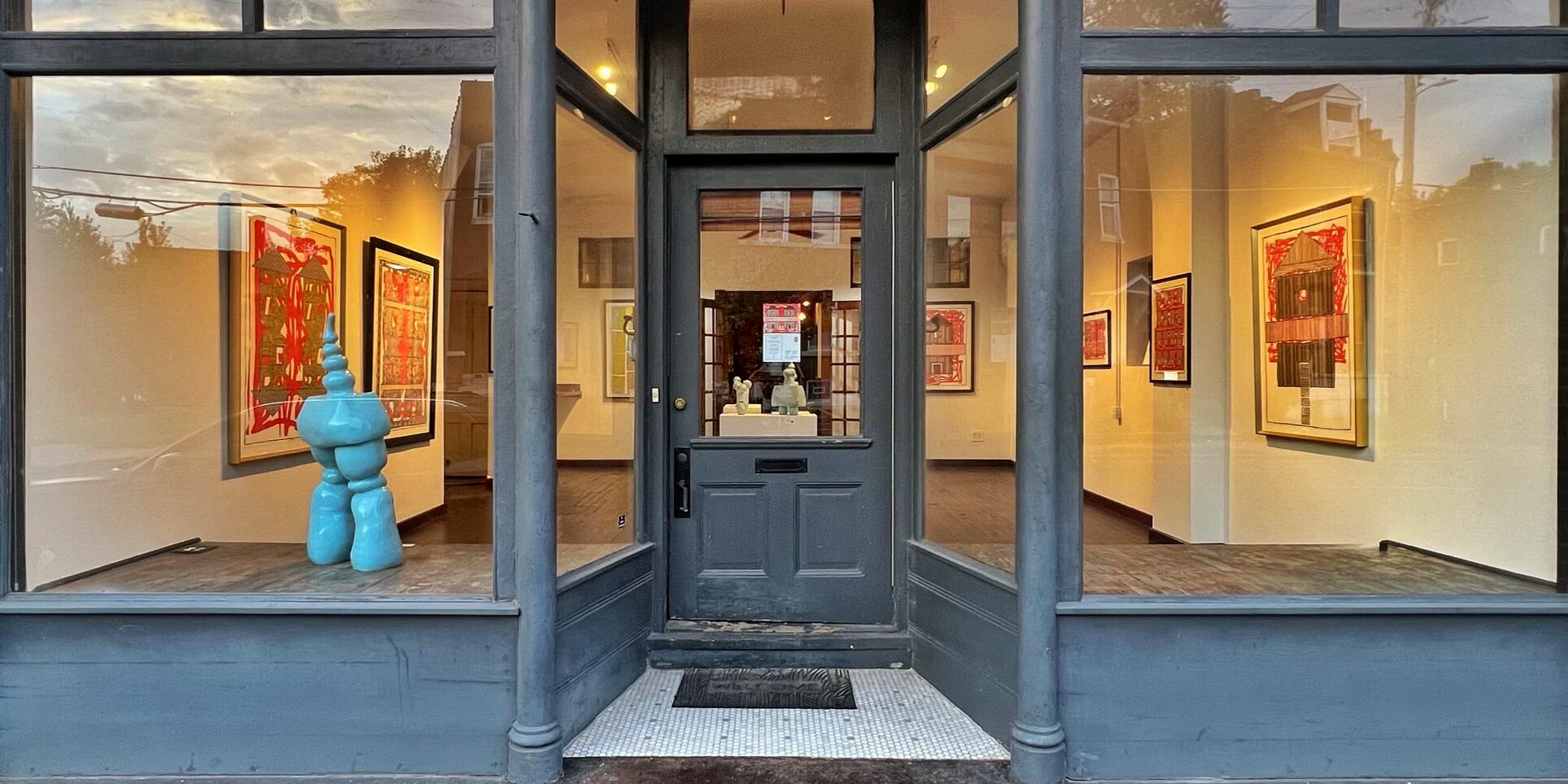
4704 Virginia Avenue: Wildfruit Projects is a community-centered art space that devises creative ways to improve art accessibility in Dutchtown. The gallery will utilize the façade grant funding to transform the front-facing driveway into a community space with permeable pavers, replace deteriorated front and back gates with more welcoming and secure designs, install improved exterior lighting to enhance safety and visibility, add new landscaping to make the exterior more inviting, and install new hardware on the entryway doors.

Winkelmann Drug, the historic pharmacy at Meramec Street and Virginia Avenue in Downtown Dutchtown, St. Louis, MO, is a 2025 Dutchtown Façade Grant recipient.

Winkelmann Drug

3300 Meramec Street: A historic staple in the community for well over a century, Winkelmann Drug will replace the store’s front-facing glass, install high-grade security film across all window units, digitally print and install custom window graphics on the windows facing Virginia Avenue, and install exterior egress vinyl paneling for advertising. The business looks forward to the improvements as part of its mission to enhance safety and accessibility while strengthening Dutchtown’s commercial corridor, preserving the area’s history in concert with surrounding buildings.


Funding for this initiative comes from SLDC’s Economic Justice Action Plan, focused on neighborhood-based growth and inclusive support for small businesses in St. Louis.

Dutchtown Main Streets and St. Louis Development Corporation (SLDC) are excited to announce $80,000 in new funding for façade improvements for Dutchtown businesses! These façade grants help to enhance the appearance of our neighborhood storefronts, attract customers, and strengthen our key commercial corridors in Greater Dutchtown.

Façade grants can be used for exterior improvements that are publicly visible from the street. This includes, but is not limited to, signage, awnings, paint, windows and doors, and more. The funds can be used for repairs, updates, and upgrades, big and small.

Who Is Eligible?

Most businesses throughout Greater Dutchtown are eligible to apply! See the map below to determine if you’re within the qualifying Greater Dutchtown footprint, which roughly spans the area from the railroad tracks on the west to the Mississippi River on the east and from Bates Street on the south to Potomac Street on the north.

A map of South St. Louis with the Greater Dutchtown area highlighted in yellow. The area extends from the Missouri Pacific railroad tracks on the west to the Mississippi River on the east and from Bates Street on the south to Potomac Street on the north.
Businesses within the Greater Dutchtown area highlighted in yellow are eligible to apply for façade grants. Certain grants are allocated specifically to Chippewa Street, Meramec Street, South Grand Boulevard, and Virginia Avenue.

Certain funds are set aside specifically for businesses on key commercial strips, including South Grand Boulevard, Chippewa Street, Virginia Avenue, and Meramec Street. Please note that businesses within the Cherokee Street Community Improvement District are not eligible.

Business owners who do not own their building are eligible; however, they must obtain written permission from the building owner for any work performed on the property in conjunction with the façade grant. Funds will be paid directly to the vendors performing the work and supplying the materials. Business owners cannot be reimbursed for previously performed work or unapproved improvements.

What Funds Are Available?

$80,000 will be divvied up into 21 grants available in the following amounts:

  • Eight $1,000 grants available to businesses anywhere in Greater Dutchtown
  • Two $4,000 grants for businesses anywhere in Greater Dutchtown
  • Two $4,000 grants for businesses on South Grand Boulevard
  • Two $4,000 grants for businesses on Virginia Avenue
  • One $4,000 grant for a business on Meramec Street
  • One $4,000 grant for a business on Chippewa Street
  • One $8,000 grant for a business anywhere in Greater Dutchtown
  • One $8,000 grant for a business on South Grand
  • One $8,000 grant for a business on Virginia
  • One $8,000 grant for a business on Meramec
  • One $8,000 grant for a business on Chippewa

Only one grant application per business will be accepted.

Who Decides Which Grants Are Approved?

The Façade Grant Review Committee will review applications. This committee includes representatives from Dutchtown Main Streets, along with neighbors randomly selected from a pool of applicants.

While any business that meets the criteria above can potentially be selected to receive a façade grant, the committee may give additional weight to certain factors when reviewing applications. Bonus points can be awarded to proposals that contribute to the artistic and cultural landscape of Dutchtown by enhancing the landscape with publicly visible art by local artists, preserving architecturally and culturally significant buildings, or otherwise supporting the expression of Dutchtown’s identity.

When and How Can You Apply?

We’re accepting grant applications now through November 1st, 2025. The grants will be reviewed and awards will be announced by December 1st, 2025.

To apply, you will need to provide:

  • A description of the proposed work
  • Photos of the façade to be improved
  • Your business’s annual revenue
  • An explanation of how the grant will help your business financially
  • An explanation of how the proposed improvements will benefit the neighborhood

If you have questions about eligibility or criteria or would like assistance with your application, drop by Dutchtown Main Streets’ office at 4219 Virginia Avenue on Tuesday or Thursday between noon and 2pm. You can also contact us at info@dutchtownstl.org or (314) 266-9696.

Ready to apply? Fill out the application here!

Dutchtown Main Streets is proud to work alongside Lutheran Development Group and many community partners to expand affordable housing options in our neighborhood, including deeply affordable units for neighbors earning as little as 30% of the area median income. We’re especially excited to share that building permits have now been issued for the Marquette Homes project, bringing us one big step closer to adding more high-quality, affordable housing right in the heart of Dutchtown!

Construction on the project is set to begin soon, with a hopeful completion by the end of 2026. You may have already noticed the scaffolding going up at 3305 Meramec in the heart of Downtown Dutchtown. The long-vacant 3600 South Grand, also known as the Melba Theater, will also undergo a full rehabilitation as part of Marquette Homes, along with several single- and multi-family buildings across Dutchtown and Gravois Park.

Committed to Affordable Housing in Dutchtown

Marquette Homes will provide much-needed options for families and individuals who want to stay and grow in Dutchtown. Across the Dutchtown Main Streets footprint, there are now 182 affordable housing units in the development pipeline, including:

  • 79 units within our mixed-use commercial district on Meramec, Virginia, and South Grand
  • 103 additional units across the broader Dutchtown Main Streets footprint and our primarily residential streets

These units comprise a mix of one-, two-, and three-bedroom homes to meet the needs of families of all sizes. Many of these projects also include ground-floor commercial spaces, creating new opportunities for local businesses to open, grow, and serve the community right where people live.

This progress reflects the commitment of Dutchtown Main Streets and our partners to a walkable, mixed-use Dutchtown where affordability is at the center—not the margins—of development. 

From Vacancy to Vibrancy

When very affordable housing is involved, the funding process can be quite complex and the timeline long, but that’s what it takes to build real, lasting affordability. Organizations like Lutheran Development Group, St. Joseph Housing Initiative, Tower Grove CDC, and Legal Services of Eastern Missouri work tirelessly alongside Dutchtown Main Streets and our neighbors to navigate the long and arduous path from vacancy to vibrancy, transforming empty eyesores and nuisance properties into quality affordable housing and commercial space.

Let’s keep building a Dutchtown where all of our neighbors and businesses can thrive together!

Lutheran Development Group has announced that they will begin collecting data for a potential new National Historic District in southeastern Dutchtown and Mount Pleasant. Survey workers will venture out across the neighborhood beginning on January 27th, kicking off the registration process in earnest.

The proposed district aims to bridge gaps between several existing National Historic Districts covering other sections of the Greater Dutchtown neighborhood. The survey area lies east of Virginia Avenue, spanning from Meramec Street to the north, Bates Street to the south, and Interstate 55 and South Broadway to the east.

A map of the proposed Mount Pleasant Historic District roughly bounded by Meramec Street to the north, Virginia Avenue to the west, Bates Street to the south, and Interstate 55 and Boroadway to the east.
The survey area for the proposed Mount Pleasant Historic District. Existing historic districts surrounding the survey area are shaded gray.

What to Expect in the Neighborhood

Survey workers will disperse across the neighborhood to gather data on the buildings in the survey area. Workers will document information on the age, condition, style, and architectural features of each building. They will also be photographing buildings from the sidewalk. If you see someone in an orange vest walking around with a clipboard and a camera, you’ve spotted a survey worker!

Houses on the 3200 block of Mount Pleasant Street in the proposed Mount Pleasant Historic District in Dutchtown, St. Louis, MO.
Several examples of the widely varied historic architecture on just one block of the proposed Mount Pleasant historic district.

The survey is limited to exterior assessments. Not to worry—workers won’t be knocking on your door to ask questions and peek inside. As a neighbor, you don’t have to do anything.

What Not to Expect

It’s very important to note here that a National Historic District does not place any additional obligations on property owners unless they pursue historic tax credits. No new rules, regulations, design standards, or rehab requirements will apply. You can do as you wish with your property—within existing laws and property codes, of course—unless you seek historic tax credits for your project. We’ll discuss the details a bit more below, but rest assured that no one will tell you what color you have to paint your window trim or what material you must use to build your fence.

What Are the Benefits of a Historic District?

Listing on the National Register of Historic Places acknowledges the history and importance of preservation of the built environment in the district. Placement on the National Register indicates the historical importance of a place, whether it be distinguished for its architecture or events, broad or narrow, that occurred there.

Additionally, properties listed on the National Register are eligible for various state and federal historic rehabilitation tax credits and historic preservation grants. With the availability of alternative funding like tax credits and grants, historic districts may see increased investment and development activity as project financing and rehab work becomes more financially viable.

Historic Tax Credits for Large-Scale Development

While credits and grants are available for historic preservation, they are generally used for larger projects. Because of the expertise and legwork required to apply for and acquire incentives, the average homeowner usually doesn’t pursue credits or grants for a modest home rehab project. The incentives provide more bang for their buck when applied to bigger buildings or a set of properties being redeveloped as a single project.

3305 Meramec Street in Downtown Dutchtown, St. Louis, MO. The historic building is part of Lutheran Development Group's Marquette Homes project and lies within the Gravois-Jefferson Historic District.
3305 Meramec Street, part of Lutheran Development Group’s Marquette Homes project that will utilize historic tax credits.

For example, Lutheran Development Group’s Marquette Homes development encompasses nine sites in Dutchtown and Gravois Park, all of which lie within the Gravois-Jefferson Historic District. Most of the sites contain historic buildings. Leveraging historic tax credits across multiple properties, LDG will be able to carefully rehab and preserve these buildings while staying within a budget that keeps the rehabbed properties affordable for future neighbors.

A map of historic districts in and around the Dutchtown neighborhood of St. Louis, MO, including the Gravois-Jefferson, Marine Villa, Dutchtown South, St. Cecilia, Grand-Bates, and Benton Park National Historic Districts.
Existing National Historic Districts in and around Dutchtown.

Historic Tax Credits for Small-Scale Rehabs

All of that being said, if your property is listed within a National Historic District and the work you plan to do exceeds 50% of the cost of the property at the time of purchase, you can apply for historic tax credits. But be warned: the complexity of the application process can be daunting. It is strongly recommended that you consult with a historic preservation specialist and an accountant to guide you through the process.

A unique historic home at Meramec Street and Louisiana Avenue in Dutchtown, St. Louis, MO.
This home on Meramec Street was extensively rehabbed with the help of historic tax credits.

If you want to dive into the gory details, you can learn more about the Missouri Department of Economic Development’s Historic Tax Credit Program. You can also check to see if your property is already in an existing historic district via the City of St. Louis Planning and Urban Design Agency.

National Historic Districts vs. Local Historic Districts

It bears emphasis: the proposed new district around Mount Pleasant would be a National Historic District, not a Local Historic District. This is an important distinction that property owners in the survey area should be aware of.

National Historic Districts do not place new restrictions on the development, construction, rehabilitation, modification, use, transfer, or demolition of buildings within the district. No new regulations come into place when an area is designated as a National Historic District.

You may have heard the trials and tribulations of homeowners in neighborhoods like Lafayette Square who were cited for painting their doors the wrong shade of blue or residents of the Central West End who had to replace a brand-new fence because they built it with wood instead of wrought iron. These tales result from the tight design regulations that come with Local Historic Districts. 

Local Historic Districts are established through a process of residents petitioning their neighbors. Then, the Board of Aldermen enacts legislation that sets design standards and requirements for rehabilitation and new construction within the district. Properties within a Local Historic District in St. Louis often must present plans for new construction or alteration of existing structures to the City’s Cultural Resources Office for review and approval to ensure they conform to the district’s highly detailed design regulations.

Again, to be clear, the new district would not be a Local Historic District. You’ll still be free to do with your property as you see fit within the current rules and regulations unless you apply for historic tax credits.

The Next Steps in the Historic District Nomination Process

In addition to collecting data on the ground as explained above, survey workers will also refer to official records from the City of St. Louis Assessor and Recorder of Deeds, Sanborn Fire Insurance Maps, and other sources. These records help determine the age of the building, the architect, the builder, and other relevant historical facts. The survey workers will then work with a historic preservation consultant to compile the complete survey. The survey is a painstakingly detailed, building-by-building description of each property in the survey area. For an example, see this listing from the 256-page Dutchtown South Historic District Nomination:

4661 VIRGINIA AV (1906)
Property Type: Two-part commercial block
Number of stories: 2
Builder: Ziegelmeier & Suter
Structural system: Load-bearing Brick

This two story commercial building has a painted brick façade with a chamfered corner bay facing the intersection of Virginia and Itaska. The primary elevation is on Virginia. The replacement door to the second story is at the right bay; wide storefront windows (not the original) occupy the rest of the Virginia elevation. A full-width fabric awning shades the first story. At the second story are two replacement 1/1 windows, with a corbelled cornice above. The store door at the corner bay is a replacement, and has its own fabric awning. Another replacement 1/1 is at its second story. The corner bay has a pyramidal tower roof with a metal finial. At Itaska, there is a bricked-in storefront at the west end of the elevation; its iron beam with floral ornaments is still in place.

The corner building at 4661 Virginia Avenue as depicted in the Dutchtown South Historic District nomination to the National Register of Historic Places.
Photo of 4661 Virginia from the Dutchtown South Historic District nomination.

Now, simply repeat this process for each of the hundreds of buildings that make up these districts! The Dutchtown South Historic District has 697 property descriptions, for example, in a footprint about half of the size of the proposed district around Mount Pleasant. An astounding amount of time, research, and shoe leather goes into preparing these surveys.

Once the survey is completed, it is submitted to the Missouri State Historic Preservation Office (SHPO). SHPO reviews the survey to confirm the district’s eligibility for listing on the National Register of Historic Places. If they determine that the district is eligible, then the historic preservation consultant prepares a nomination to be reviewed and revised by SHPO. The nomination is then reviewed at a meeting of the Missouri Advisory Council on Historic Preservation, a governor-appointed board of historians and preservationists. With their approval, the nomination is finally sent to the National Park Service. After one more review by them, the district is finally listed on the National Register of Historic Places.

As you can see, the process of establishing a National Historic District is quite involved, requiring a ton of on-the-ground work, research, documentation, and bureaucratic navigation. From initial assessment to official listing, the process can take years. Historic districts don’t happen overnight!

Establishing this new historic district is a long-term investment in the Greater Dutchtown area that will pay dividends in rehabilitation and redevelopment of our historic built environment and preservation of the decades of history lived by our neighbors, from the German immigrants who built the neighborhood at the turn of the 20th century, to the diverse community of people that makes our neighborhood a place worth saving today, and for the generations to come after us who will write the next chapters in Dutchtown’s history.

We’re grateful for Lutheran Development Group’s substantial investment of time, money, and resources to pursue this opportunity to further cement Dutchtown’s place in the history books. Here’s to our past… and to our future!